Katelyn Lesse:上千個 Agent 一起幹活,還缺四道難題
- 作者
- Katelyn Lesse;寶玉(@dotey)轉述
- 日期
- 2026-10-28 07:49(台北時間)
- 來源
- https://x.com/dotey/status/2115229306490126432
- 是否完整
- 完整。部落格原文、Katelyn 的 X Article,以及寶玉中文轉述都有。
- 抓取時間
- 2026-11-23 09:00(台北時間)
這篇在說什麼
Lesse 是 Anthropic 平台工程負責人。四道難題:基礎設施要能接突發、會等人的 Agent 工作負荷;身分與授權要分得清是人做的還是 AI 替人做的;安全與隔離,一個被騙的 Agent 可能把指令傳給同伴;監控與叫停,要有改不了的追蹤,以及一個能把整個系統停下來的總閘。最難的是判斷有沒跑偏。
以上摘要整理自 2026-11-22 的閱讀筆記,並對過本包原文。完整論證以下面正文為準。
全文
寶玉轉述 Katelyn Lesse:上千個 Agent 一起幹活,還缺四道難題
- 來源: https://www.katelynlesse.com/blog/new-problems-for-engineers-to-solve
- 作者: Katelyn Lesse;中文轉述:寶玉(@dotey)
- 日期: 部落格標注 2026-10-25;寶玉轉述貼文 2026-10-28 07:49(台北時間)
- 抓取時間: 2026-11-23 09:00(台北時間)
- 是否完整: 完整(部落格原文+Katelyn 的 X Article+寶玉中文轉述)
- 說明/缺漏:
- 部落格原文:https://www.katelynlesse.com/blog/new-problems-for-engineers-to-solve
- Katelyn 同步發布的 X Article:https://x.com/katelyn_lesse/status/2114542280535318557
- 寶玉中文轉述:https://x.com/dotey/status/2115229306490126432
寶玉中文轉述全文
- 來源: https://x.com/dotey/status/2115229306490126432
- 作者: 宝玉(@dotey)
- 日期: 2026-10-28 07:49(台北時間)
Anthropic 平台工程负责人 Katelyn Lesse:上千个 AI 智能体一起干活,还缺程序员解决四个难题
AI 越来越会写代码,很多程序员开始怀疑自己的手艺还值不值钱。Anthropic 平台工程负责人 Katelyn Lesse 10 月 25 日发文说,她看到的情况正相反:接下来一两年,AI 想做成大事,得先靠程序员解决一批新问题。她说,现在是当工程师最有意思的时候之一。
Lesse 在 Anthropic 负责平台工程,据她接受 Kleiner Perkins 访谈时的介绍,团队约 200 人。她此前在 Stripe 和 Betterment 带过工程团队。这篇文章发在她的个人博客和 X 上,X 上阅读量约 61 万。
【这些问题从哪来】
AI 智能体,就是能自己调用工具、一步步完成任务的 AI 程序。Lesse 说,它最早只是聊天框,人盯着一问一答;后来模型能独立干更久、更难的活,开始搬到云端运行;再往后出现了多智能体系统:一个总管 AI 把任务拆开,分给一批助手去做,还有的 AI 专门负责打分、提建议。
她说,现在已经有人在搭由成千上万个智能体组成、连续工作不停的系统,用来做科研、新发现和硬件设计。规模一上来,就冒出了四类新问题。
【难题一:服务器怎么安排】
现在大部分软件跑在 Kubernetes 上,这是一套给服务器排班的系统,擅长管“一模一样的副本,哪个挂了换一个顶上”。Lesse 说智能体正好相反:每个都是独一份,记着自己干到哪了;大量时间在等模型回话、等工具、等别的智能体或等人回复,闲多久说不准,忙起来又可能一下冒出几千个。
Google 上个月开源的 Agent Substrate 就是冲这个问题做的。据 Google 官方博客,它能让闲着的智能体休眠、把资源腾出来,需要时半秒内唤醒。Lesse 说这块还有大量问题没解决。
【难题二:谁在干活,能干什么】
很多智能体用的是人的账号和权限,系统得分清某个操作是人做的,还是 AI 替人做的。更难的是授权:一个系统替你连干几周,你怎么事先讲清它能做什么、不能做什么?智能体之间互相派活时,一个智能体凭什么相信另一个?Lesse 说,确认身份可以借用现成技术,比如用很快过期的临时凭证代替长期有效的密钥;授权这块基本还是空白。
【难题三:一个被骗,全队遭殃】
Lesse 说,最近几个月,尤其最近几周,软件漏洞冒出来的速度超过了业界修补的速度,很多出在大量系统依赖的核心软件里。本月 PHP、GitLab、Node.js 就接连发布了严重漏洞的修复。上千个智能体跑在这些软件上,还要写来路不明的代码、读来路不明的网页,没修好的漏洞就危险得多。
多智能体还多一层风险:一个智能体被网页里藏的恶意指令骗了,可能把指令转给同伴,甚至写进共享记忆,让后来的智能体也照做。她的建议是让每个智能体在严格隔离的“沙箱”里干活,好比实验室把每份样本放进独立的密封箱,一个出事不会传染整屋。
【难题四:跑偏了要能叫停】
系统得记下每个智能体做了什么,而且任何智能体都改不了自己或别人的记录。还得有一个总闸,监控一发现问题,就能把整个系统一次停下,收回所有权限。Lesse 说最难的是判断系统有没有跑偏:一个智能体反复尝试访问不在白名单里的网站,可能是在搞破坏,也可能只是太想把任务做完。
文章最后,Lesse 对正在焦虑的工程师说,这些领域大多还没有现成答案,值得钻进去学、形成自己的判断。
原文:https://t.co/CDW4BthOgP
Agent Substrate 官方介绍:https://t.co/M5LtIg57lH
Katelyn Lesse 部落格原文
- 來源: https://www.katelynlesse.com/blog/new-problems-for-engineers-to-solve
- 作者: Katelyn Lesse
- 日期: 2026-10-25
The new set of problems for engineers to solve
2026-10-25
A lot of software engineers are going through what can only be described as an identity crisis. The job has changed a lot. Some are depressed, others are having the time of their lives. There's a really specific thing I see happening that makes me really excited for what engineering looks like over the next, call it a year or two - AI just isn't going to be able to create the incredible outcomes it's capable of creating unless software engineers solve problems to make it possible. This is existential, which is honestly a lot of fun, so it's a pretty incredible time to be a software engineer.
Multiagent systems are creating these problems
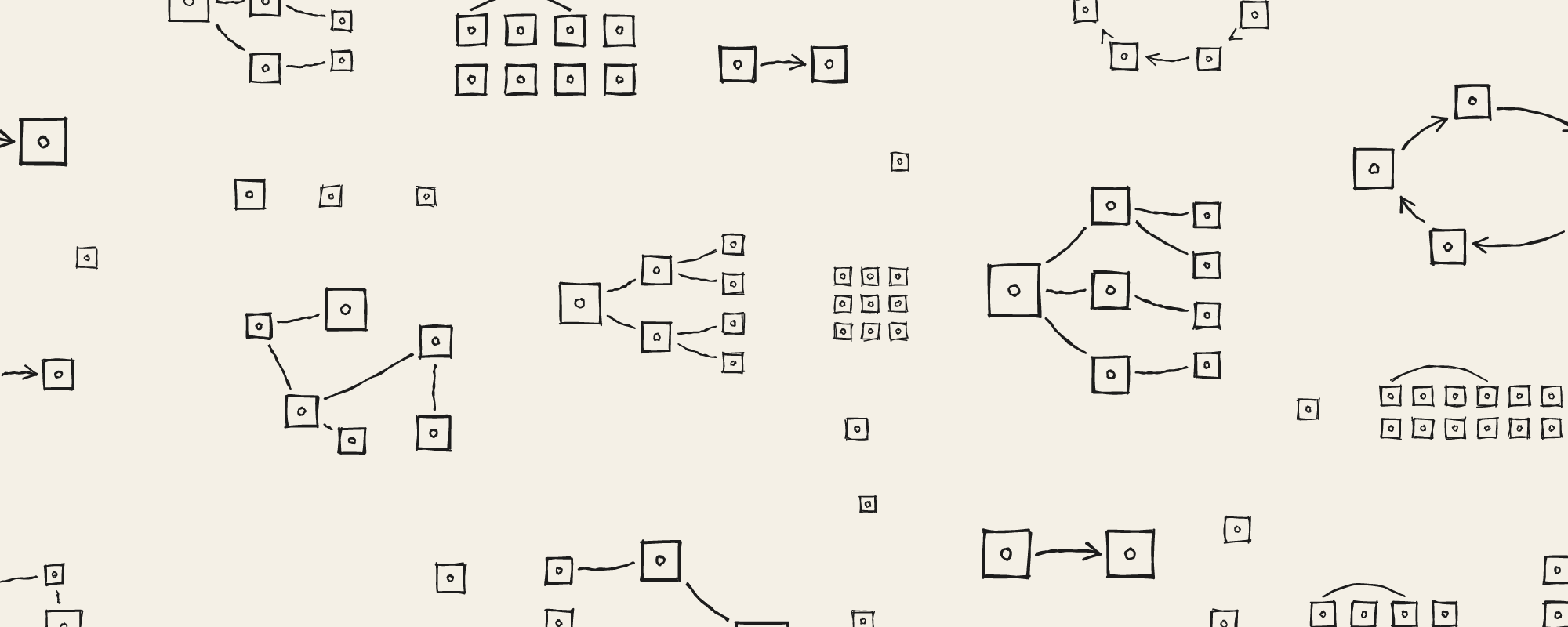
Agents started out as basic, human in the loop chats. Then models got better at running for longer on harder problems, and agentic systems started moving to the cloud. While that was happening, models have started to get better at working together, and people have built basic multiagent systems. Like an orchestrator that spawns some subagents for a given task, or giving agents jobs other than executing to improve outcomes, like grading or advising or dreaming.
Now, some folks are starting to build truly amazing multiagent systems to tackle the world's hardest and most important problems, like serious research, discovery, and hardware design. Picture thousands of agents, persistently working towards these outcomes. This comes with a new set of software engineering problems that we're already seeing crop up.
Infrastructure needs to evolve to handle burstier workloads. We need proper authentication and authorization to identify agents, let them work together, enable them to take the actions they should, and prevent them from taking the actions they shouldn't. Security and proper isolation are critical for untrusted code and content. And we've gotta have monitoring and the ability to stop a system in its tracks when it's veering into the wrong territory.
Models will keep getting better, and these types of multiagent systems will become really powerful. But software engineers have to solve all these problems if we're going to actually unlock that power and enable the world to trust it to create good outcomes like cured diseases rather than bad outcomes.
The problems
Infrastructure needs to evolve
The software industry has been building on Kubernetes, which was designed for stateless, replicated apps or stable numbered sets of stateful pods. Agents are totally different. They're essentially isolated, stateful, single-instance workloads. They can go idle for arbitrary amounts of time between bits of work, and they spend a lot of time waiting on tools, model inference, other agents, or human input. Some workloads need fast startup times, others need to avoid wasting compute, and others need crazy scale. Amazing engineers are pushing hard on this problem space - like AI infra companies building new filesystems and sandboxing offerings, and the Google team building Agent Substrate as a new runtime. There's a ton left to figure out.
Identity and access
There are problems to solve in agent authentication - identifying an agent that took an action. This area has the benefit of the building blocks that have been built and hardened from the microservices world, like workload identity with short-lived certs rather than static keys, and folks are beginning to apply these concepts to agents.
Agent authorization as a problem space is much more wide open - what do you allow an agent to do? Many agents work on behalf of a human, and use that human's identity and credentials to access various systems and take actions. There's already a problem in there, which is identifying that it was the agent and not the actual human who took an action. But there are deeper problems in this on-behalf-of (OBO) setup, like consent. If multiagent systems are working for weeks, how does the human meaningfully approve what their agent can do? Agentic platform features like auto approval for tool calls helps, but there's deeper permissioning needed to get this right at high scale. And then we have agents working with their own identity, which is even less solved, and how we apply that to agents working together - how does an agent trust another agent that asked it for something?
Security and isolation
Over the past few months and especially in the past couple weeks, we've seen vulnerabilities surfacing faster than the industry can patch them, much of it in critical core software that many systems rely on. Now think about thousands of persistent agents running on top of that core software, writing untrusted code and reading untrusted content. Those unpatched vulns get a lot more dangerous in that world, and one of the most important things for software engineers to do is get creative about how to harden that software - kernels, browsers, runtimes, and common libraries.
Multiagent systems add another twist. A compromised agent could pass injected instructions to other agents it's working with, and those instructions could end up in memory for future agents to accidentally trust. Blast radius gets real - how much of the multiagent system is at risk when that first agent got compromised? Isolation becomes important in that world - agents should use strongly isolated sandboxed execution environments to take actions. I wrote a bit about that here.
Monitoring and halting
Lastly, we need the tools to make sure these multiagent systems are working in a positive direction, and that we catch them and cut them off if they're not. We need OTel tracing across agents, and to ensure that an agent can never modify its own trace or another agent's trace. We need kill switches that monitoring can trigger, that truly stop the whole system at once and cut off its creds. Really the hard part is how to know when the system is going in the wrong direction. Well-intentioned persistence to solve a problem can look a lot like maliciousness - repeated attempts to reach a domain that isn't on its allowlist, for example.
Software engineers should be excited
This is for the engineers feeling an identity crisis because they think their knowledge and skills won't be important - you and your skills can be the difference in whether or not these problems get tackled and multiagent systems can solve the world's hardest problems. You can and should go deep in these domains, learn new things, and form opinions. So much of this problem space is wide open for new solutions. It's an incredibly exciting time to put your skills to work.
同一篇文章的 X Article
- 來源: https://x.com/katelyn_lesse/status/2114542280535318557
- 作者: Katelyn Lesse(@katelyn_lesse)
- 日期: (日期未知)
- 標題: The new set of problems for engineers to solve
A lot of software engineers are going through what can only be described as an identity crisis. The job has changed a lot. Some are depressed, others are having the time of their lives. There's a really specific thing I see happening that makes me really excited for what engineering looks like over the next, call it a year or two - AI just isn't going to be able to create the incredible outcomes it's capable of creating unless software engineers solve problems to make it possible. This is existential, which is honestly a lot of fun, so it's a pretty incredible time to be a software engineer.
Multiagent systems are creating these problems
Agents started out as basic, human in the loop chats. Then models got better at running for longer on harder problems, and agentic systems started moving to the cloud. While that was happening, models have started to get better at working together, and people have built basic multiagent systems. Like an orchestrator that spawns some subagents for a given task, or giving agents jobs other than executing to improve outcomes, like grading or advising or dreaming.
Now, some folks are starting to build truly amazing multiagent systems to tackle the world's hardest and most important problems, like serious research, discovery, and hardware design. Picture thousands of agents, persistently working towards these outcomes. This comes with a new set of software engineering problems that we're already seeing crop up.
Infrastructure needs to evolve to handle burstier workloads. We need proper authentication and authorization to identify agents, let them work together, enable them to take the actions they should, and prevent them from taking the actions they shouldn't. Security and proper isolation are critical for untrusted code and content. And we've gotta have monitoring and the ability to stop a system in its tracks when it's veering into the wrong territory.
Models will keep getting better, and these types of multiagent systems will become really powerful. But software engineers have to solve all these problems if we're going to actually unlock that power and enable the world to trust it to create good outcomes like cured diseases rather than bad outcomes.
The problems
Infrastructure needs to evolve
The software industry has been building on Kubernetes, which was designed for stateless, replicated apps or stable numbered sets of stateful pods. Agents are totally different. They're essentially isolated, stateful, single-instance workloads. They can go idle for arbitrary amounts of time between bits of work, and they spend a lot of time waiting on tools, model inference, other agents, or human input. Some workloads need fast startup times, others need to avoid wasting compute, and others need crazy scale. Amazing engineers are pushing hard on this problem space - like AI infra companies building new filesystems and sandboxing offerings, and the Google team building Agent Substrate as a new runtime. There's a ton left to figure out.
Identity and access
There are problems to solve in agent authentication - identifying an agent that took an action. This area has the benefit of the building blocks that have been built and hardened from the microservices world, like workload identity with short-lived certs rather than static keys, and folks are beginning to apply these concepts to agents.
Agent authorization as a problem space is much more wide open - what do you allow an agent to do? Many agents work on behalf of a human, and use that human's identity and credentials to access various systems and take actions. There's already a problem in there, which is identifying that it was the agent and not the actual human who took an action. But there are deeper problems in this on-behalf-of (OBO) setup, like consent. If multiagent systems are working for weeks, how does the human meaningfully approve what their agent can do? Agentic platform features like auto approval for tool calls helps, but there's deeper permissioning needed to get this right at high scale. And then we have agents working with their own identity, which is even less solved, and how we apply that to agents working together - how does an agent trust another agent that asked it for something?
Security and isolation
Over the past few months and especially in the past couple weeks, we've seen vulnerabilities surfacing faster than the industry can patch them, much of it in critical core software that many systems rely on. Now think about thousands of persistent agents running on top of that core software, writing untrusted code and reading untrusted content. Those unpatched vulns get a lot more dangerous in that world, and one of the most important things for software engineers to do is get creative about how to harden that software - kernels, browsers, runtimes, and common libraries.
Multiagent systems add another twist. A compromised agent could pass injected instructions to other agents it's working with, and those instructions could end up in memory for future agents to accidentally trust. Blast radius gets real - how much of the multiagent system is at risk when that first agent got compromised? Isolation becomes important in that world - agents should use strongly isolated sandboxed execution environments to take actions. I wrote a bit about that here.
Monitoring and halting
Lastly, we need the tools to make sure these multiagent systems are working in a positive direction, and that we catch them and cut them off if they're not. We need OTel tracing across agents, and to ensure that an agent can never modify its own trace or another agent's trace. We need kill switches that monitoring can trigger, that truly stop the whole system at once and cut off its creds. Really the hard part is how to know when the system is going in the wrong direction. Well-intentioned persistence to solve a problem can look a lot like maliciousness - repeated attempts to reach a domain that isn't on its allowlist, for example.
Software engineers should be excited
This is for the engineers feeling an identity crisis because they think their knowledge and skills won't be important - you and your skills can be the difference in whether or not these problems get tackled and multiagent systems can solve the world's hardest problems. You can and should go deep in these domains, learn new things, and form opinions. So much of this problem space is wide open for new solutions. It's an incredibly exciting time to put your skills to work.